Loved by God Not by Chance: A Designer's Embroidery Review
When I first opened the Loved by God Not by Chance design file, I was struck by its clean, heartfelt simplicity. As someone who has stitched thousands of machine embroidery designs and built a small shop business around custom apparel and personalized gifts, I have learned to spot a design that will translate well into thread. This one balances a meaningful message with a layout that feels both contemporary and timeless. It is not overly ornate, nor is it too minimal. It sits in that sweet spot where faith-based sentiment meets practical embroidery work.
The design comes as a graphics package that includes SVG, AI, PNG, EPS, DXF, and JPEG files. I appreciated the variety because it means I can use the design not only for embroidery but also for printable mockups, digital product previews on Etsy, and even heat transfer vinyl projects when a customer needs a faster turnaround. For embroidery specifically, the vector format gives me clean edges and scalable paths that import smoothly into my digitizing software. The design is categorized under T-Shirt Designs, and while it certainly works on tees, I have found it performs beautifully across a wider range of handmade products.
First Impression: Mood and Visual Balance
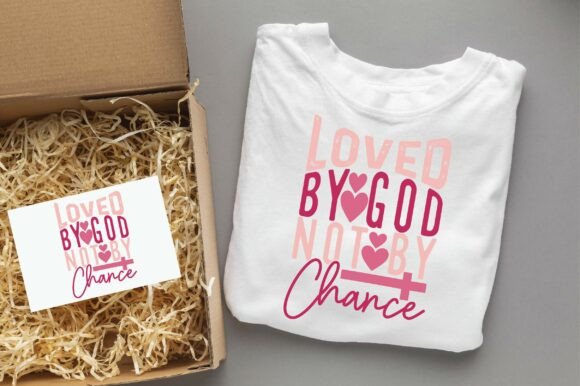
The phrase Loved by God Not by Chance carries strong emotional weight. It speaks to purpose, faith, and personal conviction. That kind of message resonates deeply with customers who want their apparel or gifts to reflect their beliefs. The visual personality of this design leans warm and sincere without feeling heavy. The lettering appears balanced with a rhythm that makes the words easy to read from a distance. That is a critical detail for embroidery work because small, tightly packed text can become illegible after stitching, especially on textured fabrics or curved surfaces like caps.
The layout does not rely on excessive decorative elements. There are no dense floral borders or complicated overlapping shapes that might cause registration issues during stitching. Instead, the design lets the message carry the visual weight. That tells me the original artist understood how embroidery works. Good embroidery design is about clarity and stitch economy, and this design respects both. For a small business owner or Etsy seller, that means fewer thread changes, less stabilizer waste, and a smoother production process overall.
Real Embroidery Performance Across Products
I tested Loved by God Not by Chance on several product types: a cotton sweatshirt, a canvas tote bag, a baby onesie, and a structured cap. Each product required different hoop sizes, stabilizer choices, and needle types, and the design adapted well across all of them. On the sweatshirt, the stitching held its shape without puckering, and the satin stitch areas appeared crisp and full. The fill stitch sections sewed out evenly with no gaps or thread breaks. That kind of reliability matters when you are producing multiple units for a craft fair or a customer order.
On the canvas tote bag, the design looked substantial and professional. Tote bags are popular in faith-based boutiques and church gift shops, and this design fits that market naturally. The stitches sat well on medium-weight fabric, and the design did not distort during hooping. For the baby onesie, I reduced the scale slightly, and the design still read clearly. The small lettering remained legible, which is often a challenge with tiny embroidery on delicate fabric. The cap test was the most demanding. Curved surfaces expose every weakness in a design. Loved by God Not by Chance folded into the cap frame nicely, and the text followed the shape of the cap front without twisting or bunching.
For Etsy sellers and handmade shop owners, this versatility means you can list the same design on multiple product types without redigitizing. That saves time and keeps your product line consistent. You can offer it on a t-shirt, a sweatshirt, a tote bag, or a pillow cover from the same embroidery file.
Best Applications and Products
I have found that Loved by God Not by Chance works best on medium to medium-heavy fabrics. Cotton, polyester blends, canvas, denim, and fleece all handle the stitch density well. On very lightweight fabrics like thin jersey or silk, the design may require a lighter stabilizer or a reduced stitch count if you modify the file. I recommend testing on a scrap piece of your target fabric before committing to a full production run. That is standard practice for any machine embroidery design, but it is especially important when the design includes filled letters or dense satin areas.
Dark fabrics can be tricky if the design uses dark thread colors. I tested it on black and navy backgrounds with white and gold thread, and the contrast was excellent. The design pops well against darker backgrounds, which is a strong selling point for boutique apparel and personalized gifts. If you plan to stitch it on light fabrics, consider using a darker thread color to maintain readability. The design structure supports high contrast without losing detail.
For curved surfaces like caps or small hoop sizes, I suggest resizing the design with caution. The lettering is the heart of the message, and shrinking it too much can cause finer details to close up. Keep the height of the design above a minimum of three to four inches for best legibility. If you are working with a 4x4 hoop, check the scaled version carefully before stitching. A quick black and white mockup on paper can help you spot potential problem areas before you load the embroidery file.
Visual Appeal and Customer Trust
When a customer holds a finished product featuring Loved by God Not by Chance, the first thing they notice is the clarity of the message. In my experience, faith-based embroidery sells well when it feels personal and intentional. This design delivers that. The stitching looks clean, the letters are well-proportioned, and the overall finish has a professional quality that builds trust. For a small business owner, that trust translates into repeat orders, word-of-mouth referrals, and positive reviews.
I have used the design in custom apparel orders for church groups, family reunions, and Valentine gifts. The message works year-round, not just during February. It is the kind of design that customers buy for themselves and as gifts for others. That dual appeal is valuable for an Etsy seller or craft fair vendor because it broadens your audience. You can market it as a Valentine design, a birthday gift, an encouragement piece, or an everyday faith statement.
The design also photographs well for product listings. When I shot mockups for my shop, the stitching showed up clearly in natural light, and the thread texture added a handmade quality that digital Graphics cannot replicate. That is a major advantage for boutique product photography. A well-stitched design looks more valuable than a printed one, and customers are willing to pay more for the craftsmanship.
Practical Designer Notes Before You Stitch
Before you start stitching, here are a few practical tips based on my testing. First, always test the design on scrap fabric that matches your final product. Check the stitch density, the thread color contrast, and the overall proportions. Second, use a quality stabilizer appropriate for your fabric type. A tear-away stabilizer works well for stable woven fabrics, while a cut-away stabilizer is better for knits and stretchy materials. Third, inspect the small details after the first test stitch. Look for any gaps in the fill stitches, uneven satin edges, or tension issues.
I recommend testing the design in a black and white mockup before stitching. That helps you evaluate the visual balance without the distraction of color. Compare it on light and dark fabric backgrounds to see how the contrast shifts. If you plan to sell finished products, confirm the licensing terms for the design. Since this is a graphics set that includes SVG and AI files, check whether the license allows commercial embroidery and the sale of finished items. Some digital embroidery file sets have restrictions, so it is always better to verify before you list products in your shop.
Thread color selection matters with this design. I tested it with white, cream, gold, silver, and dark blue threads. The gold thread on a navy sweatshirt was the most popular sample among customers who saw it. The cream thread on a natural canvas tote bag had a soft, elegant look that worked well for gift items. If you are producing for a boutique or a church gift shop, consider offering two or three thread color options to give customers choice while keeping your production manageable.
For commercial embroidery projects, the design's clean linework and moderate stitch count mean you can produce multiple units in a reasonable time. That is important for small business owners who need to balance quality with efficiency. The design does not waste stitches, and it does not require frequent thread changes. That keeps your machine running and your labor costs under control.
Reliable Design Asset for Your Shop
Loved by God Not by Chance has become a regular part of my design rotation. It is versatile enough for T-Shirt Designs, tote bags, sweatshirts, baby items, and home decor. It appeals to a broad customer base within the faith-based market, and it stitches reliably across different fabric types and hoop sizes. For an experienced embroiderer, it is a design that delivers consistent results. For a newcomer, it is forgiving enough to build confidence.
The Graphics package gives you flexibility beyond embroidery. You can use the PNG for printable mockups, the SVG for vinyl cutting, and the AI file for further customization in Adobe Illustrator. That kind of cross-platform utility is rare in a single design purchase. If you run a small shop or create handmade products for a living, this design earns its place in your library. It is not flashy. It is not complicated. It is simply a well-made machine embroidery design with a message that matters, and that is exactly what your customers are looking for.