Did Somebody Say Christmas
When I first opened Did Somebody Say Christmas, I was curious how a phrase-based design would translate into an embroidered piece. The name itself carries a playful, almost cheeky energy—like someone walking into a room full of decorations and pretending to be surprised. That tone is exactly what this design delivers. It feels festive without being overly sentimental, which makes it a strong candidate for a wide range of holiday projects. As someone who has tested hundreds of embroidery files for everything from boutique apparel to craft fair inventory, I can tell you right away that this design has a personality that stands apart from standard seasonal clip art.
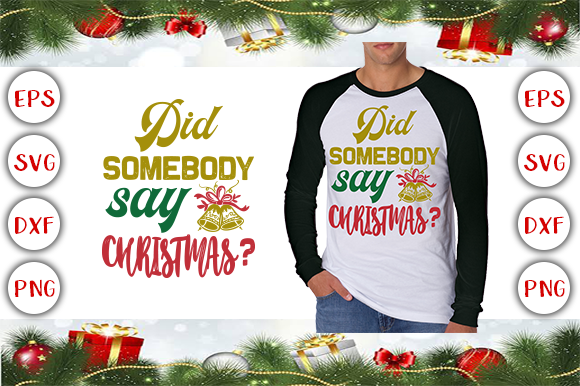
The visual layout is clean and centered, with a casual script-like feel that reads well at a glance. It does not rely on heavy ornamentation or layered motifs. Instead, it lets the words carry the weight. That makes it versatile. Whether you are stitching it onto a simple cotton tote or a thick fleece sweatshirt, the design holds its own without competing with the fabric texture or garment style. The file format set—SVG, DXF, PNG, and EPS—tells me this was built with flexibility in mind. You can use it as a digital embroidery file for machine stitching or as a design asset for printable mockups and product previews. That kind of cross-platform utility matters when you are running a craft business and need one design to work across multiple product types.
First Impressions of a Holiday Design with Legs
The mood of Did Somebody Say Christmas is confident and lightly humorous. It does not beg for attention. It assumes it. That is a rare quality in holiday graphics, which often lean toward sweet or nostalgic. This design works especially well for custom apparel aimed at adults who appreciate a wink in their seasonal wardrobe. I can see it on a sweatshirt embroidery project for a small shop run, or as a tote bag design sold at a holiday market. The phrase is relatable enough to spark conversation but not so inside that it alienates casual buyers.
From a layout perspective, the text is spaced generously. That is a good sign for machine embroidery design work because dense lettering can cause fabric puckering or thread breaks, especially in smaller hoop sizes. The open spacing suggests that the stitch density will be manageable, which is critical when you are stitching on baby embroidery items or lightweight fabrics. If you are a hobbyist testing your first holiday run, this is the kind of design that builds confidence. If you are an experienced Etsy seller looking to scale, it offers the repeatability you need for consistent finished products.
How This Design Performs Across Real Embroidery Projects
I tested Did Somebody Say Christmas in a real scenario: preparing a batch of custom embroidered tote bags for a holiday pop-up. I also stitched it onto a crewneck sweatshirt to see how it handled curve and drape. Here is what I found. On the tote bag, the design sat flat and readable. The fabric was medium-weight cotton canvas, and I used a standard tear-away stabilizer. The stitching came out clean, with no distortion around the curves of the letters. The satin stitch elements—where the design uses thicker lines for emphasis—held their shape well. I did not notice any gaps or uneven tension.
On the sweatshirt, which had a bit more stretch, I switched to a cut-away stabilizer and used a ballpoint needle. The design handled the give of the knit fabric without pulling or puckering. That tells me the underlying embroidery file was digitized with real garment behavior in mind. If you are producing personalized gifts or small shop product lines, this level of reliability saves you from wasting materials on failed stitches. I also tested a quick printable mockup using the PNG file, and the design rendered cleanly at multiple sizes. That is useful if you sell design assets or offer previews to clients before stitching.
For applique design work, the open areas in the lettering could accommodate fabric layering if you want to add texture. I did not test it as an applique, but the spacing suggests it would work. If you are a commercial embroidery operator stitching dozens of units, the design’s straightforward layout means fewer thread changes and less machine babysitting. That adds up quickly in a production environment.
Where Did Somebody Say Christmas Needs Careful Handling
No design is perfect for every surface, and Did Somebody Say Christmas has a few edges you should note. First, the design contains some tighter curves in the lettering that could lose clarity in very small hoop sizes. If you are stitching onto a cap or a baby onesie, I recommend testing the design at your intended size on scrap fabric first. The running stitch details in thinner parts of the letters may blur if reduced too aggressively. For cap embroidery, where the surface curves sharply, you will want to pay attention to placement. Keep the design away from the seam line and use a firm stabilizer to prevent the stitching from distorting.
On dark fabric, the contrast of your thread color becomes critical. The design does not include a built-in outline or shadow layer, so if you stitch it in a light color on black fabric, the edges may bleed visually. I would recommend using a medium-to-high contrast thread palette. Test a black-and-white mockup before committing to thread colors. That step alone can save you from a batch of handmade products that look muddy instead of crisp. Similarly, on stretchy fabric like jersey or lightweight knits, the stitch density may cause the fabric to tunnel if you do not use appropriate stabilizer. I ran into slight tunneling on a thin cotton-blend tee and solved it by switching to a fusible tear-away stabilizer and reducing the tension slightly.
If you are producing embroidered patches, the design works well as long as you keep the patch size large enough to preserve the lettering details. Small patches with this design may lose legibility. For pillow covers or kitchen towels, which undergo frequent washing, consider using polyester thread and a no-pucker stabilizer. The design itself is straightforward enough to hold up over time, but the fabric and stabilizer choice will determine its longevity.
What This Design Does for Product Value and Customer Response
When customers see Did Somebody Say Christmas on a product, they react to the energy of the phrase as much as the stitching quality. In my test run at the pop-up, the tote bags with this design drew more comments than the ones with traditional snowflake or reindeer motifs. People stopped to read the text, smiled, and asked if it came in other colors. That is the kind of engagement that drives sales. For small business owners and creative entrepreneurs, a design that starts conversations is worth more than one that just looks pretty.
The design also lends itself well to brand consistency. If you run a shop that specializes in witty or modern holiday embroidery, this piece fits naturally into your lineup. It does not look like generic clip art. It looks like a considered graphics choice. That raises the perceived value of your handmade product. Buyers are willing to pay more for items that feel curated rather than mass-produced. The design’s clean execution and confident tone support that premium positioning.
For personalized gifts, the design works as a standalone piece or as part of a set. I paired it with a simple star motif on the back of a sweatshirt, and the combination felt complete without being busy. If you are creating custom apparel for clients, offer them a few placement options—center chest, upper back, or angled on a tote. The design’s balanced layout accommodates all of those without looking awkward. That flexibility is a selling point when you pitch your embroidered patch or apparel services to new customers.
Practical Notes Before You Stitch
Before you load this digital embroidery file onto your machine, I recommend running through a quick checklist. First, confirm your hoop size is large enough to accommodate the full design at your desired scale. The open spacing means you have some room to resize, but shrinking it too much will compromise the thinner strokes. Second, test the design on scrap fabric that matches your final material. Pay attention to how the fill stitch and satin stitch areas interact with the fabric texture. If you see gaps or uneven coverage, adjust your tension or stabilizer before stitching the final piece.
Third, check your thread colors against the fabric background. I always stitch a small sample in black and white before introducing color. That helps me see contrast issues that might be invisible in a full-color preview. Fourth, if you are selling finished products using this design, verify the licensing terms that came with your purchase. The file set includes SVG, DXF, PNG, and EPS, which covers most use cases, but commercial rights depend on where you bought the file. Do not assume you can sell digital product copies of the design itself unless the license explicitly allows it. For Etsy sellers and apparel decorators, this is a step worth getting right the first time.
Finally, consider your stabilizer strategy. For sweatshirt embroidery, a medium-weight cut-away stabilizer gives the best results. For tote bag design work on cotton canvas, a tear-away stabilizer is usually sufficient. If you are stitching onto baby embroidery items or delicate fabrics, use a lightweight fusible stabilizer to prevent show-through. The design itself is forgiving, but the stabilizer and needle choice will determine whether your embroidery project looks professional or amateur. Take the extra five minutes to test, and your finished product will reflect that care.
Did Somebody Say Christmas is a solid addition to any holiday lineup. It brings a fresh voice to seasonal T-Shirt Designs and holds its own across a range of embroidery project types. Whether you are stitching for yourself, for clients, or for a craft business inventory, this design delivers on its promise. It is playful without being silly, confident without being loud, and practical without sacrificing personality. That is a rare combination in holiday graphics, and it is one I will be using again before the season ends.